EDP vs EDT: Understanding Fragrance Types and Concentrations
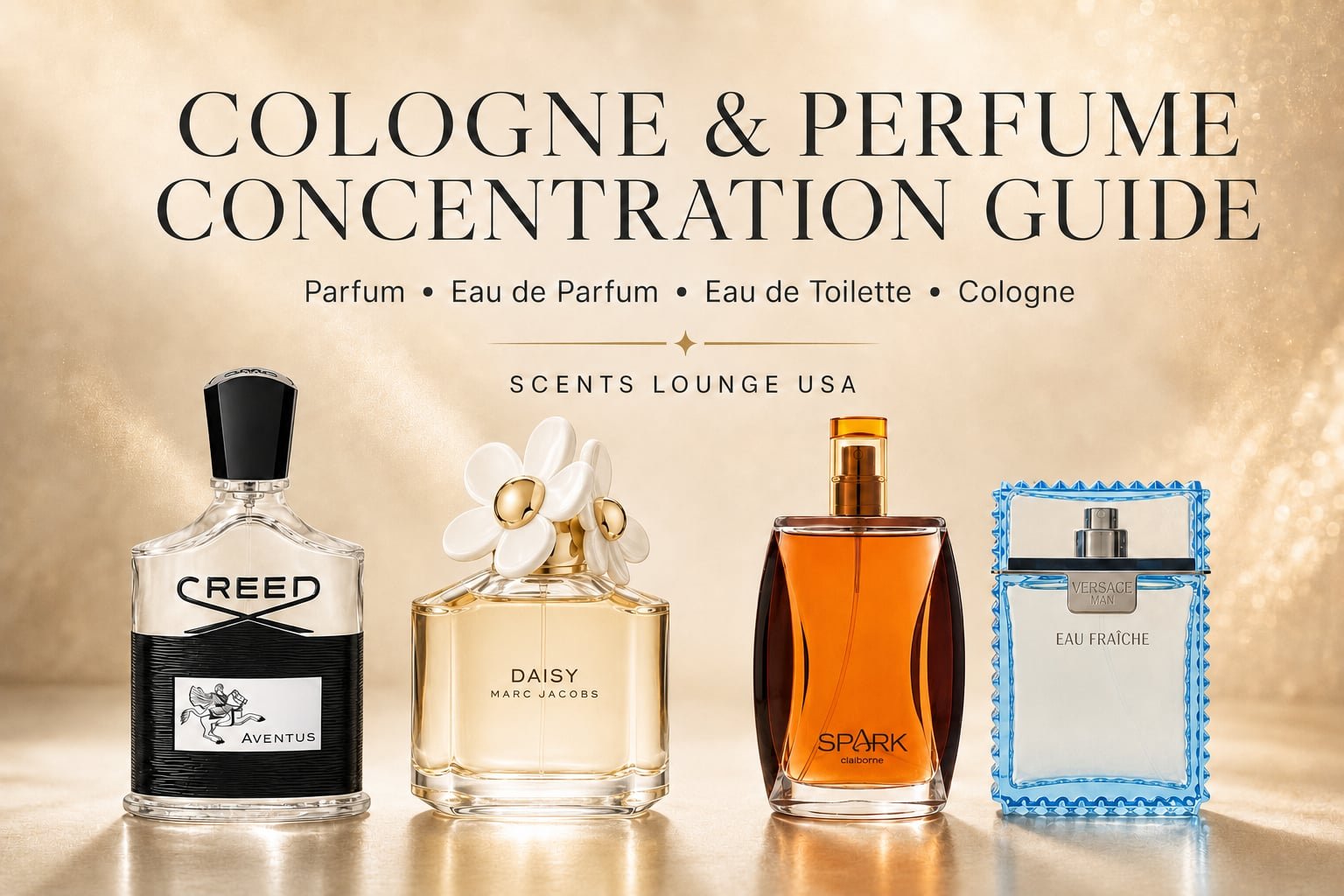
From Parfum to Cologne, understanding fragrance concentrations can help you choose the perfect scent—and learn which fragrance concentration best fits your lifestyle, preferences, and desired longevity.
EDP vs EDT: Which one is better? Have you ever found the perfect fragrance—only to notice that the bottle says Eau de Parfum, Eau de Toilette, Parfum, or Eau de Cologne?
These terms are more than fancy French names. They generally describe the concentration of fragrance oils in a product, which can affect its strength, longevity, projection, and price.
Understanding these differences can help you choose a fragrance that fits your lifestyle, whether you want a light everyday scent, a bold fragrance for a night out, or something that lasts from morning until evening.
In this guide, we’ll explain the most common types of perfume and cologne, how long each one may last, and how to choose the right concentration for you.
First, What Is Fragrance Concentration?
Most spray fragrances contain a blend of:
Fragrance or perfume oils
Alcohol
Water
Stabilizing ingredients
The concentration refers to the approximate amount of aromatic fragrance material in the formula. A higher concentration often produces a richer scent and longer wear, while a lower concentration usually feels lighter and may need to be reapplied sooner.
However, concentration is not the only factor that determines performance. Fragrance ingredients, weather, application method, skin type, and the individual brand’s formula can all affect how a scent performs.
Concentration ranges are also approximate—not every fragrance house uses exactly the same formula or classification.
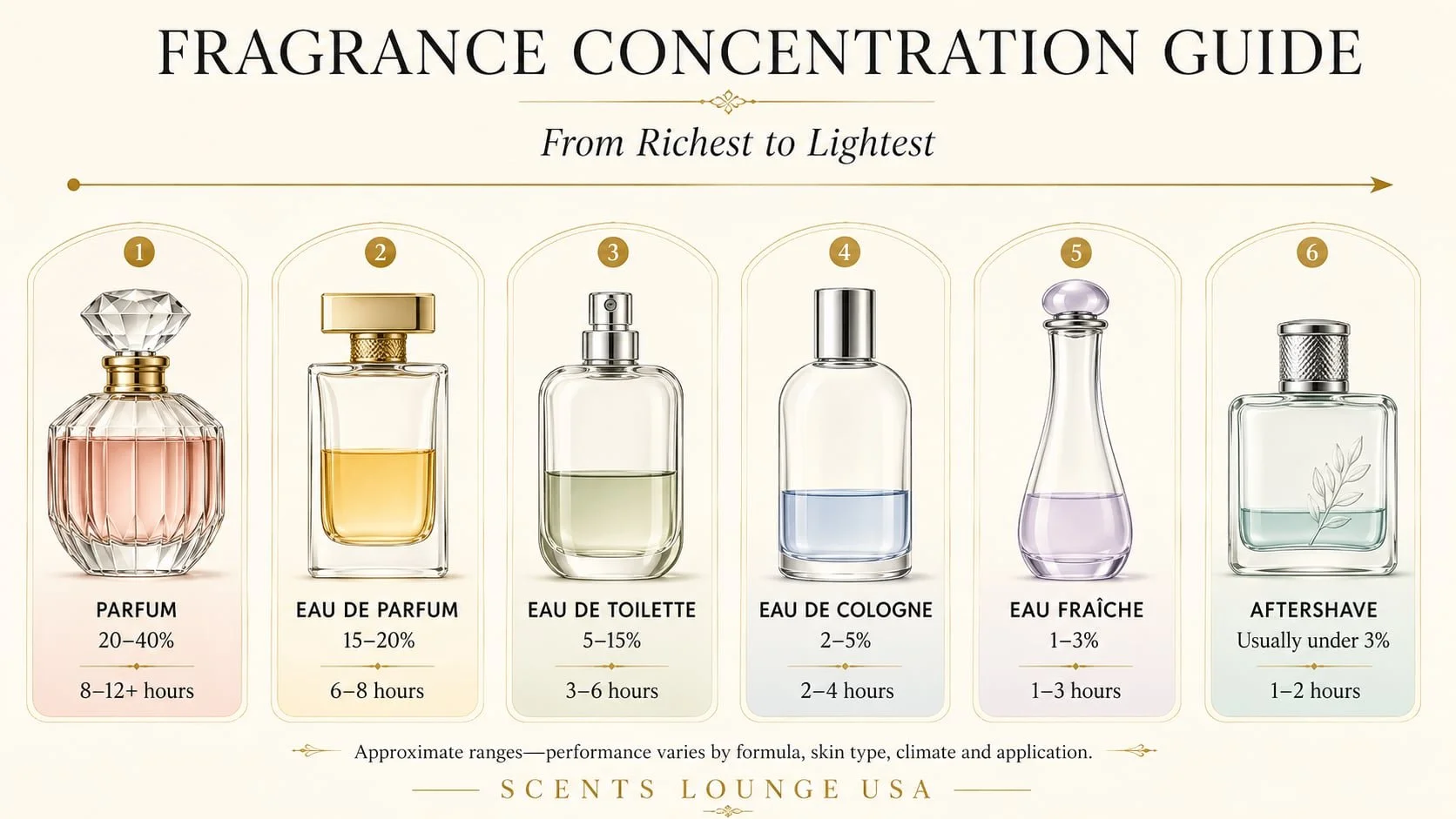
Fragrance Concentration Guide
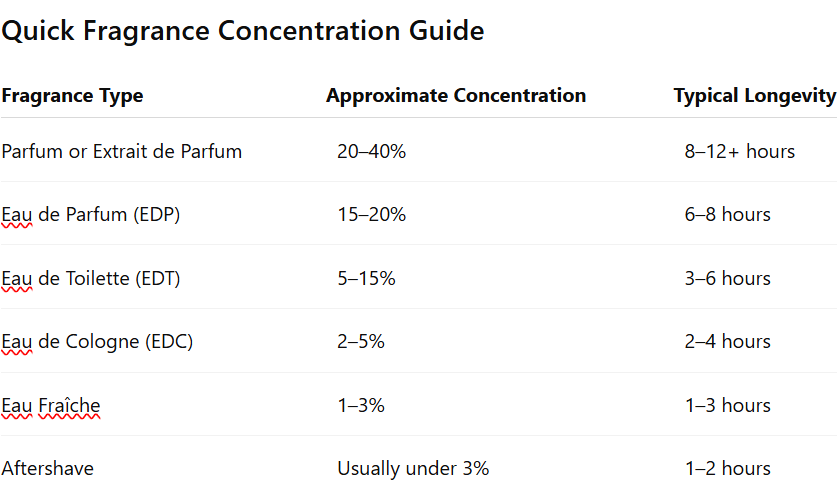
These are general estimates. An Eau de Toilette with powerful ingredients can sometimes outlast a softer Eau de Parfum.
1. Parfum or Extrait de Parfum
Parfum—sometimes called Pure Parfum, Perfume Extract, or Extrait de Parfum—generally has the highest concentration of fragrance oils.
Because it is highly concentrated, Parfum usually offers a rich, deep scent that develops gradually on the skin. It may sit closer to the body than a strong spray fragrance while still lasting for many hours.
Parfum is a good choice if you:
Want excellent longevity
Prefer a rich, luxurious scent
Do not want to reapply frequently
Enjoy fragrances that develop slowly
Want a special-occasion or evening fragrance
Since Parfum is highly concentrated, a small amount may be enough. It is commonly applied to pulse points such as the wrists, neck, or behind the ears.
Typical wear time
Approximately 8–12 hours or longer, depending on the fragrance and your skin.
2. Eau de Parfum
Eau de Parfum, commonly abbreviated as EDP, is one of the most popular fragrance concentrations.
An EDP usually provides a strong balance between longevity, projection, and versatility. It may be noticeable enough for evenings and special occasions while remaining wearable during the day when applied moderately.
Eau de Parfum formulations may also emphasize deeper heart and base notes, such as amber, vanilla, woods, musk, patchouli, leather, or resins.
Eau de Parfum is a good choice if you:
Want a fragrance that lasts for most of the day
Prefer a noticeable scent
Need a fragrance for work, dates, dinners, or events
Want good performance without choosing a pure Parfum
Enjoy warm, rich, or more intense fragrance profiles
Typical wear time
Approximately 6–8 hours, although some EDP fragrances may last longer.
3. Eau de Toilette
Eau de Toilette, abbreviated as EDT, usually contains a lower concentration of fragrance oils than Eau de Parfum.
An EDT often feels lighter, fresher, and more immediately noticeable when first sprayed. Many Eau de Toilette fragrances highlight bright top notes such as citrus, herbs, aquatic accords, fruit, or fresh spices.
This makes EDT fragrances especially popular for daytime wear, the office, warmer weather, and casual occasions.
Eau de Toilette is a good choice if you:
Prefer a lighter fragrance
Want an easy everyday scent
Live in or are visiting a warm climate
Enjoy fresh, citrus, aquatic, or aromatic scents
Do not mind reapplying later in the day
Typical wear time
Approximately 3–6 hours.
Do not assume that an EDT is automatically weak. Some Eau de Toilette fragrances offer strong projection and impressive longevity, depending on their ingredients and formulation.
4. Eau de Cologne
Eau de Cologne, abbreviated as EDC, traditionally refers to a lighter fragrance concentration featuring fresh citrus and aromatic notes.
An Eau de Cologne often provides an uplifting burst of freshness, but it may need to be reapplied throughout the day.
Eau de Cologne is a good choice if you:
Enjoy refreshing citrus or herbal fragrances
Want something light after showering
Prefer subtle fragrances
Need a casual warm-weather scent
Do not mind frequent reapplication
Typical wear time
Approximately 2–4 hours.
Is “Cologne” Only for Men?
No. This is one of the most common fragrance misconceptions.
In everyday American language, people often use “cologne” to describe fragrances marketed to men and “perfume” to describe fragrances marketed to women. Technically, however, Eau de Cologne is a fragrance concentration—not a gender category.
Men can wear Eau de Parfum or Parfum, and women can wear Eau de Cologne or Eau de Toilette. Fragrance does not have to be limited by gender. The best fragrance is the one you enjoy wearing.
5. Eau Fraîche
Eau Fraîche means “fresh water” in French. It has one of the lightest fragrance concentrations and typically contains more water and less alcohol than other spray fragrances.
Eau Fraîche products offer a subtle and refreshing scent experience. They can be ideal for very hot weather, outdoor activities, or occasions when you do not want a powerful fragrance.
Eau Fraîche is a good choice if you:
Want a very light scent
Prefer minimal projection
Need something refreshing for hot weather
Like reapplying fragrance during the day
Find stronger fragrances overwhelming
Typical wear time
Approximately 1–3 hours.
6. Aftershave
Aftershave is primarily a grooming product rather than a traditional long-lasting fragrance. It is designed for use after shaving and may contain soothing, cooling, or astringent ingredients.
Although many aftershaves smell pleasant, their fragrance concentration is usually low, so the scent tends to fade quickly.
Typical wear time
Approximately 1–2 hours.
If you enjoy the scent of an aftershave but want longer-lasting performance, look for the corresponding EDT, EDP, or Parfum version.
Proper storage helps protect your fragrance: Keep perfume and cologne in a cool, dry place away from direct sunlight, heat, humidity, and frequent temperature changes. Improper storage can affect the fragrance’s scent, color, stability, and overall performance over time.
Eau de Parfum vs. Eau de Toilette: Which Is Better?
Neither concentration is automatically better. The right choice depends on where you plan to wear it, how strong you want it to be, and how frequently you are comfortable reapplying.
Choose Eau de Parfum if:
Longevity is one of your top priorities
You prefer deeper or more noticeable fragrances
You want something for evenings or cooler weather
You do not want to reapply often
Choose Eau de Toilette if:
You prefer a fresh or lighter scent
You need an everyday or office-friendly fragrance
You want something suitable for warm weather
You are comfortable reapplying when necessary
You may even enjoy owning both concentrations. An EDT can work well during the daytime, while an EDP or Parfum can provide a richer option for evenings and special occasions.
Does a Higher Concentration Always Mean a Stronger Version of the Same Scent?
Not necessarily.
When a fragrance is available as both an EDT and an EDP, the two versions may contain more than different amounts of fragrance oil. A brand may change the notes, ingredient balance, or overall character of each version.
For example, the Eau de Toilette may emphasize fresh citrus or aromatic notes, while the Eau de Parfum may introduce warmer woods, amber, vanilla, or spices.
For that reason, you should not choose based only on concentration. Read the fragrance notes and product description to understand how each version may smell.
What Affects How Long a Fragrance Lasts?
Fragrance longevity varies from person to person. Several factors can influence performance.
Your skin type
Fragrance may evaporate more quickly on dry skin. Moisturized skin can sometimes hold scent longer.
The fragrance notes
Citrus and fresh green notes often fade sooner than ingredients such as amber, woods, musk, vanilla, leather, oud, or patchouli.
Temperature and weather
Heat can make a fragrance project more strongly and evaporate faster. Cooler temperatures may make a fragrance feel quieter but allow heavier notes to develop gradually.
Application method
Applying fragrance to pulse points or lightly misting clothing may improve longevity. Always test delicate fabrics before spraying them.
The individual formula
Two fragrances labeled Eau de Parfum can perform very differently. Concentration is helpful, but it is not a guaranteed measure of longevity or projection.
How to Make Your Fragrance Last Longer
To help your perfume or cologne perform at its best:
Apply an unscented moisturizer before spraying.
Spray your pulse points, including the neck and wrists.
Avoid rubbing your wrists together because this can disturb the fragrance’s natural development.
Apply fragrance after showering, once your skin is dry.
Lightly spray clothing only when the formula is safe for the fabric.
Store the bottle away from direct sunlight, heat, and humidity.
Keep your fragrance in its original box or a cool, dark location when possible.
Avoid storing fragrance bottles in a hot car or on a sunny windowsill. Repeated exposure to heat and light can affect the formula over time.
How Many Sprays Should You Use?
The right number depends on the fragrance, concentration, occasion, and your surroundings.
As a general starting point:
Parfum: 1–3 sprays
Eau de Parfum: 2–4 sprays
Eau de Toilette: 3–5 sprays
Eau de Cologne or Eau Fraîche: Reapply lightly as needed
Powerful fragrances may require fewer sprays. In close environments such as an office, restaurant, classroom, or airplane, lighter application is usually more considerate.
How to Choose the Right Fragrance Type
Before purchasing your next fragrance, ask yourself:
Do I want a light or noticeable scent?
How many hours do I want it to last?
Will I wear it during the day or at night?
Is it for work, casual use, dates, or special occasions?
Will I wear it mainly in warm or cool weather?
Am I comfortable reapplying it?
What fragrance notes do I enjoy most?
If you want lasting performance, start by exploring Eau de Parfum and Parfum options. If you prefer fresh everyday wear, an Eau de Toilette may be an excellent choice.
The concentration is important, but your personal preference matters most.
Find Your Next Fragrance at Scents Lounge USA
Now that you understand the difference between Parfum, Eau de Parfum, Eau de Toilette, and Eau de Cologne, you can shop with greater confidence.
At Scents Lounge USA, you can explore designer colognes and perfumes for men and women at competitive prices. Whether you prefer a fresh everyday Eau de Toilette, a long-lasting Eau de Parfum, or a convenient fragrance sample to try before committing to a full bottle, there are options for different styles and occasions.
Ready to discover your next signature scent?
Shop fragrances at Scents Lounge USA and compare fragrance types, sizes, and scent profiles to find the right match for you.
Frequently Asked Questions
What is the longest-lasting type of perfume?
Parfum or Extrait de Parfum generally has the highest concentration and may provide the longest wear. Individual performance still depends on the formula, ingredients, skin, and environment.
Is Eau de Parfum stronger than Eau de Toilette?
Eau de Parfum generally contains a higher concentration of fragrance oils and often lasts longer. However, some Eau de Toilette formulas can project strongly or outperform lighter EDP fragrances.
Is Eau de Toilette good for everyday use?
Yes. Eau de Toilette is often a great choice for work, daytime activities, casual occasions, and warm weather because it tends to smell lighter and fresher.
Can men wear perfume?
Absolutely. “Perfume” can refer to fragrance generally or to a concentration. Men can wear EDT, EDP, Parfum, or any fragrance they enjoy.
Can women wear cologne?
Yes. Eau de Cologne is a concentration and is not exclusively for men. Fragrance choices should be based on personal taste, not gender labels.
Should I buy Eau de Parfum or Parfum?
Choose Eau de Parfum if you want a versatile balance of strength, longevity, and price. Consider Parfum if you want a richer scent, potentially longer wear, and a more concentrated experience.
Final Thoughts
The words on a fragrance bottle can tell you a lot about what to expect, but they do not tell the entire story.
Parfum generally offers the richest concentration and longest wear. Eau de Parfum provides a versatile balance of strength and longevity. Eau de Toilette is often fresh and ideal for everyday use, while Eau de Cologne and Eau Fraîche offer lighter, refreshing scent experiences.
Use concentration as a helpful guide—but always consider the fragrance notes, occasion, climate, and your personal style.
Your perfect fragrance is not simply the strongest or most expensive one. It is the scent that makes you feel confident every time you wear it.
