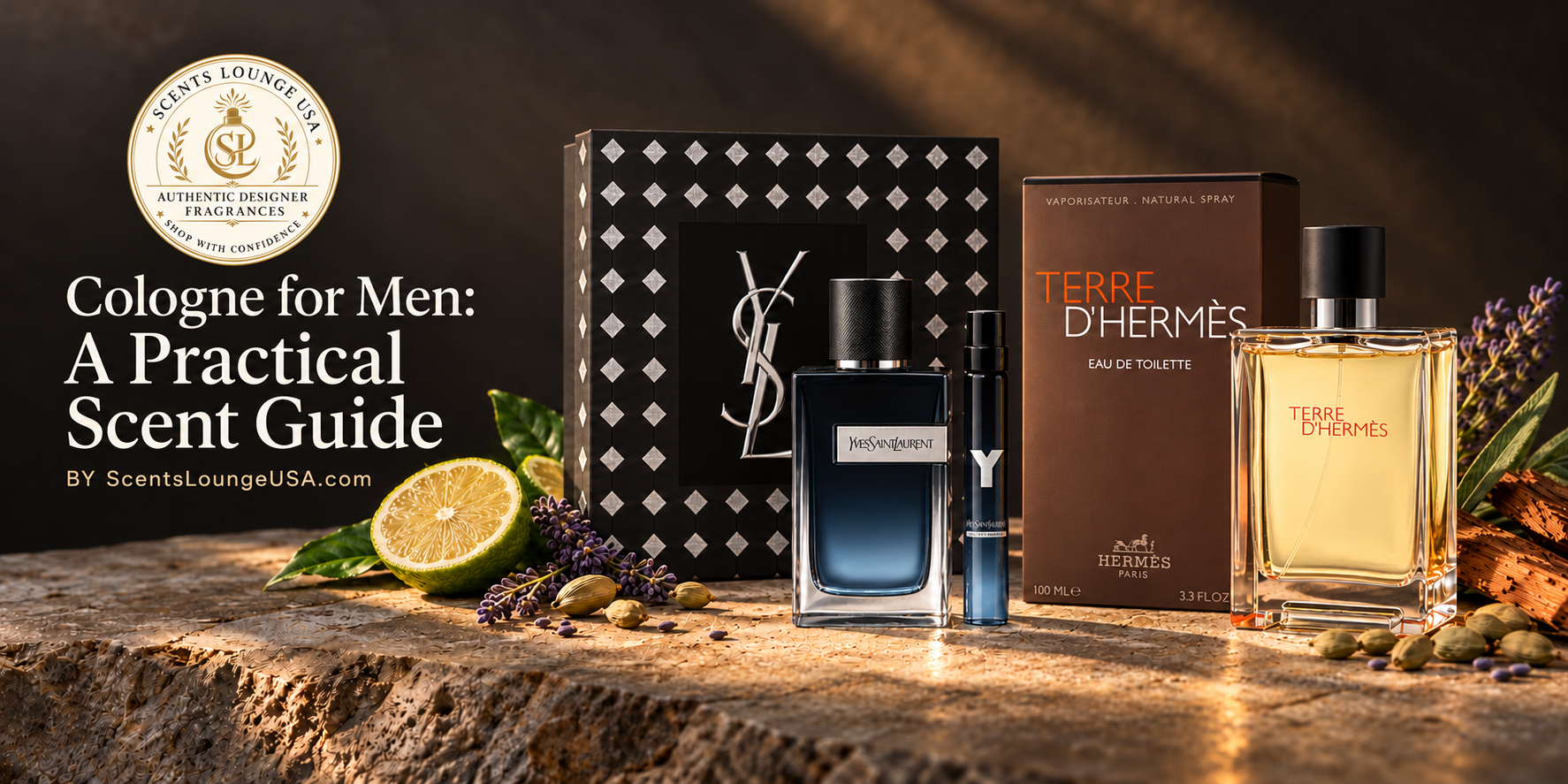
The right cologne can feel like part of your style, but the bottle that works for one person may not suit your day or your skin. This guide to cologne for men breaks the choice into scent styles, settings, concentration, wear habits, and bottle formats, so you can shop with a clearer plan.
Table of Contents
Start With the Scent Styles You Enjoy
Start with the smells you already like. Think of a crisp citrus peel, freshly cut wood, warm spice, or a sweet dessert note. Those simple cues can help you sort through fragrance names and descriptions without needing to know every perfumery term.
A scent family is a broad group of fragrances with a similar feel. Citrus scents often come across as bright and fresh. Woody scents tend to feel dry, smooth, or warm. Spicy fragrances may have a sharp or cozy edge, while aromatic scents often pair herbs with fresh or woody notes.
Gourmand is another useful word. It describes notes that bring food to mind, such as vanilla or tonka bean. These scents can feel creamy and sweet. They may suit an evening out, but you can also wear them during the day if you prefer a warmer scent.
Fragrances change as they dry on your skin. The first impression comes from the top notes, also called opening notes. Heart notes appear as that opening fades, then the base notes shape the dry down, or the scent’s later stage. A fragrance with fresh citrus at the start might settle into woods or musk. Give it time before deciding whether you like the full scent.
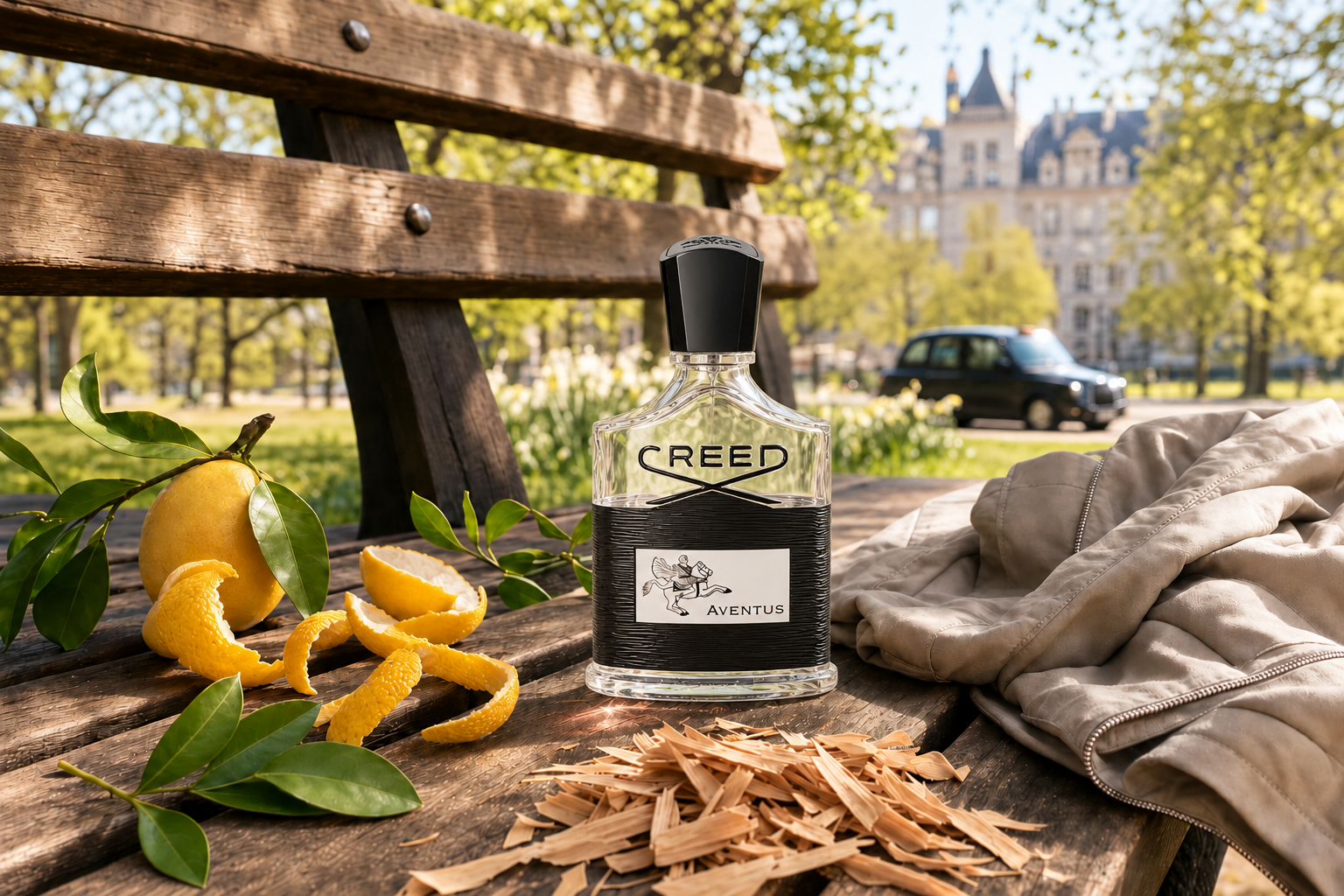
Some familiar fragrances show how these styles can mix. YSL Y EDP pairs fresh sage and geranium with a woody base and tonka bean. Versace Eros EDT combines mint oil, green apple and Italian lemon with geranium and ambroxan. Creed Aventus brings together pineapple and blackcurrant with birch and musk. These examples can help you name the notes you tend to enjoy; they aren’t a scorecard for what you should buy.
Don’t rely on a fragrance’s name or first spray alone. If you like bright openings but dislike a heavy dry down, look for lighter-feeling notes and test the scent on your skin before choosing a bottle. If you enjoy sweetness, pay attention to whether it comes from vanilla, fruit, or another warm accord. Each can feel quite different.
Scents Lounge USA’s catalog includes Club De Nuit Untold by Armaf EDP, an Eau de Parfum with saffron and jasmine at the top, amberwood and ambergris at the heart, then fir resin and cedar in the base. That progression moves from floral brightness toward a warm, woody finish. It’s a useful example of why reading the note structure can tell you more than a short label such as fresh or bold.
Key Takeaway: Pick two or three note styles you enjoy, then judge a fragrance by how it develops on your skin.
Match Cologne to Your Routine, Setting, and Season
A scent should fit the space you’re in. At work or in a close meeting, a quieter fragrance is usually easier to wear than a scent with a strong trail. For an evening out, you may prefer warmer woods, spice, or a sweeter accord. The goal is to choose a scent that feels right at the distance where people will meet you.
Think about the full day, too. A fragrance you enjoy at home may feel too rich in a warm car or a crowded room. If your routine includes an office, a commute, and dinner plans, a versatile scent with fresh notes and a smooth base can be easier to wear than a very sweet or dense one.
Weather changes how a fragrance feels. Heat can make scent project more strongly, while cold air can make it seem quieter. Humidity and your skin can affect the result as well. That’s why the same number of sprays may feel different on a hot summer afternoon than on a cool evening.
For spring, fresh green or aromatic notes can feel at home in mild weather. In summer, citrus and aquatic styles often suit warm days. Fall can be a good time for woods or spice, while deeper amber and vanilla notes may feel comforting in cold weather. These are starting points, not rules. If you love a warm fragrance in summer, try a lighter application and see how it wears.
Time of day matters less than the setting. A crisp scent can work for dinner if that’s what you enjoy. A sweet fragrance can work during the day if you keep it close to the skin. In a shared office, start with less. You can always adjust after you learn how your fragrance behaves.
For travel, choose a size that suits the trip and your bag. A manufacturer-packaged mini or sample can make more sense than carrying a full-size bottle when you’re away briefly. Keep the bottle secure and follow any relevant airline rules for liquids. Don’t count on a fragrance to smell exactly the same in a new climate; test it after you arrive before applying more.
For a familiar fresh style, consider Acqua Di Gio by Giorgio Armani Eau de Toilette, a classic citrus and aquatic scent. Consider the occasion, temperature, and how close others will be before choosing how much to apply.
Understand EDT, EDP, and Parfum
EDT, EDP, and Parfum are concentration labels. They point to different fragrance strengths, but they don’t tell you exactly how a scent will perform on your skin. The formula matters. So do the notes, how much you apply, and the conditions where you wear it.
Eau de Toilette, or EDT, is often a lighter-feeling choice. Eau de Parfum, or EDP, is often richer or more concentrated. Parfum is commonly used for a more concentrated format. These are broad patterns, not a promise that every EDT will be light or every Parfum will last longer than every EDP.
That distinction matters when you compare bottles. If two fragrances have different concentration labels, don’t assume one will last longer just because its label sounds stronger. Longevity varies by formula and person. A warm base may remain noticeable on one wearer but fade sooner on another. A fresh scent may also feel more present in warm air.
Use the label as one clue, then check the listed notes and test the scent. If you’re comparing two versions of a fragrance, confirm the full name and concentration before adding one to your cart. A line can include EDT, EDP, and Parfum versions with different scent profiles. A similar name doesn’t guarantee the same formula.
If you’re choosing a first bottle, an EDT may suit you if you prefer a lighter feel or want a scent for daytime use. An EDP may appeal if you like a fuller scent character. But personal taste should lead. Test both if you can, and wear each through its opening and dry down before you decide.
For an Eau de Parfum example, Armani Code by Giorgio Armani Eau de Parfum is one option to consider. Check the product page for the precise version and size, since the concentration and bottle format are part of what you’re choosing.
It also helps to separate strength from projection. Projection is how far a scent seems to travel from you. Sillage is the trail it leaves as you move. A fragrance can be rich but sit close to the skin, or feel noticeable in the air without being especially long-lasting. These terms describe different parts of wear.
So treat concentration as a useful comparison point, not a performance guarantee. Notes, application, climate, and your own skin all shape what happens after the first spray.
Set Realistic Expectations for Wear and Application
Longevity means how long you can notice a fragrance on your skin. Projection describes how far it carries. Sillage is the scent trail left as you move. These are related, but they aren’t the same. A fragrance may stay close to you while remaining noticeable for a while, or project strongly at first and then settle down.
There isn’t one fixed wear time that applies to everyone. Skin, weather, the fragrance formula, and how much you use can all change the result. A fragrance description may help set expectations, but don’t treat a stated wear-time claim as a guarantee for your day.
Start with clean, dry skin. Apply a small amount, then give the scent time to settle. Pulse points such as the chest or neck can be convenient spots, but you don’t need to cover every one. If you’re new to a fragrance, begin with one or two sprays. You can make a note of how it feels after an hour and later in the day.
Resist the urge to reapply just because your nose has stopped noticing the fragrance. Your brain can become used to a scent even while people nearby can still smell it. Step outside for a short time or ask someone you trust for a low-key opinion before adding more. Keep the amount modest in shared spaces.
Skin prep may change how a fragrance wears. Dry skin can make some scents seem to fade sooner, while moisturized skin may help the scent remain noticeable. That doesn’t mean you need a matching product line. A plain, unscented moisturizer can keep other smells from competing with the fragrance you’re testing.
Be careful when layering aftershave, deodorant, body spray, and cologne. Strong scents can clash, especially when they belong to different families. If you use a scented deodorant, try a cleaner or more neutral fragrance alongside it. Or let one product take the lead and keep the others subtle.
Don’t spray fragrance in your eyes or on irritated skin. Some people are allergic or sensitive to certain fragrance ingredients. If a product causes discomfort, stop using it and follow the instructions on its packaging. Avoid assuming that a friend’s wear time predicts yours. Your skin and routine are different.
Pro Tip: Test a new scent on skin before a long event. Wear it through the opening and dry down, then decide whether its strength suits the setting.
Choose Between Samples, Minis, Full-Size Bottles, and Gift Sets
The format you buy can matter as much as the fragrance. A sample is a small way to test a scent before committing to a larger bottle. A mini gives you more room to wear it over several days. A full-size bottle can make sense when you already know the fragrance fits your taste and routine.
Read the format details closely. A manufacturer-packaged sample is not the same thing as a store-made decant. Check the product name, concentration, size, and packaging description on the listing. If you’re buying for yourself, those details help you compare what’s in the cart with what you meant to choose.
Samples can help you compare notes in a focused way. Try one scent on one wrist and another on the other, then give each time to develop. Keep a quick note of the opening, heart, and dry down. If you spray several fragrances at once, it can be hard to tell which one you like or how each changes over time.
A mini may be a better fit when a sample feels too brief to judge. Wear it on a regular day rather than saving it for a special event. Notice whether you still enjoy it after several hours and whether it fits your usual settings. A mini is also handy when you want to carry a scent with you, though check the product details and container before travel.
Full-size bottles are a more considered purchase. Look at the bottle size as well as the price. A larger bottle may appear to cost less per ounce, but that only helps if you’ll use it before your preferences change. A smaller bottle can be a sensible choice if you rotate scents or are still learning what you like.
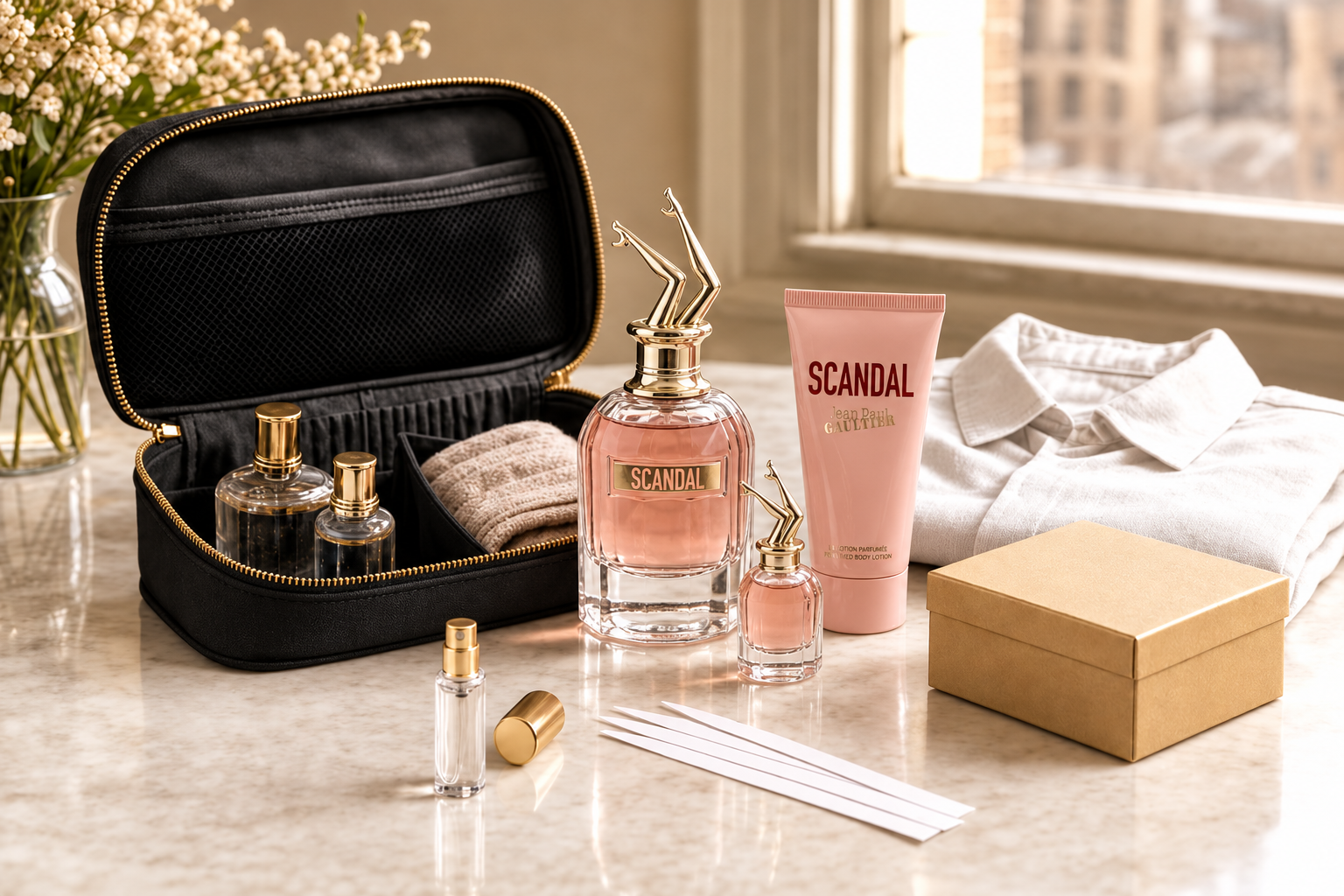
Gift sets can offer a coordinated way to give fragrance. Check each item in the set before purchasing. It may include a main fragrance plus a mini or a scented body product. Confirm the exact contents and concentration rather than assuming every set contains the same items.
For a gift, think about what the person already wears. If you know the exact fragrance, concentration, and format, a larger bottle may be welcome. If you’re unsure about their taste, a mini or a set can give them more room to explore. Avoid guessing based only on age or clothing style; scent preferences are personal.
Scents Lounge USA carries full-size bottles, minis, manufacturer-packaged samples, and gift sets in its current catalog. The retailer ships from within the United States to U.S. customers. Check the live listing for the exact format and current price before placing an order, since product details can differ by item.
Shop for Value and Verify the Exact Fragrance
Value depends on more than the price on the screen. Compare the bottle size, concentration, and format. A small bottle can have a lower total cost yet a higher cost per ounce. A large bottle can look like a better deal but go unused if you only wear the fragrance now and then.
Check the full product name before you buy. Confirm whether it’s EDT, EDP, or Parfum. Look for the listed size and whether the item is a full bottle, mini, sample, or gift set. A flanker, which is a related version of a fragrance, may have a different concentration or scent profile. Similar names can be easy to mix up.
Review the listed notes and the product description, then compare them with the fragrance you intended to purchase. Check the seller’s stated authenticity information and the packaging details. Customer comments are individual reports, not independent proof for every retailer. Shop with a seller that clearly describes its authenticity practices.
At Scents Lounge USA, the catalog describes its fragrances as authentic designer fragrances. Use the exact product listing to confirm which bottle and format you’re considering. Don’t assume that a price shown for one size applies to another size or to a gift set.
Be careful with reference prices and sale labels. A price comparison is useful only when it refers to the same fragrance, concentration, and size. If you’re weighing two formats, work out the cost per ounce from the current prices and sizes shown. That gives you a more useful comparison than looking at the total price alone.
Stock can change. Check the product page close to purchase, and read the current shipping and return terms before ordering. Scents Lounge USA ships from within the United States to U.S. customers, but shipping costs and delivery timing should be checked against the current checkout details rather than assumed.
Authenticity and value go together. A low price doesn’t tell you whether a fragrance is genuine, and a high price doesn’t prove it will last longer on your skin. Choose a seller that clearly identifies the product, then make your decision using the exact format and scent profile you want.
Frequently Asked Questions About Cologne for Men
How do I test cologne on my skin?
Apply a small amount to clean, dry skin and give it time to develop. Smell the opening first, then check again later for the heart and dry down. Test one fragrance at a time if you’re still learning what you like. A paper strip can help with an initial check, but skin gives you a better sense of how it wears on you.
How should I store cologne?
Store cologne in a cool, dry place away from direct sunlight and sharp temperature swings. A bedroom drawer or closet shelf can be a better choice than a sunny windowsill or a humid bathroom. Keep the cap on when you’re not using the bottle. Follow any storage directions printed on the product packaging.
Does cologne smell different on different people?
Yes, the same fragrance can seem different from person to person. Skin, weather, and application can affect how its notes come across and how long you notice them. That’s why a scent that works well for a friend may not feel the same on you. Test it on your own skin before choosing a full-size bottle.
Can I wear cologne with aftershave or deodorant?
Yes, but strong scents can compete. Try pairing cologne with an unscented or lightly scented deodorant and aftershave, or keep the products within a similar scent family. Start with less cologne in close settings. If the mix smells busy or too strong, use fewer scented products rather than adding more fragrance.
Find a Cologne That Fits Your Routine
Choose a scent family you enjoy, test the dry down on your skin, and buy the size that fits how often you’ll wear it. Explore authentic designer fragrances at Scents Lounge USA and find a scent that fits your style and budget.
